
The framework structures each horizon with its own hypothesis type and evidence requirements. Horizon 1 investments are evaluated against operational performance data and competitive benchmarks. Horizon 3 bets are evaluated against strategic scenario analysis and technology trend signals. Both are documented in the same Decision Memory framework so the portfolio can be managed as a whole.
Innovation portfolio strategy: make your bets explicit.
Map investments across strategic horizons and defend every allocation with clear rationale.
94%
Executives dissatisfied with innovation
70%
Innovation budgets stay incremental
8 weeks
Innovation portfolio timeline
Trusted by teams making high-stakes decisions











1
What decision does this use case solve?
Innovation strategy has a portfolio problem. Most enterprises allocate innovation budgets by default, through the annual budget process, rather than by design. The result is a portfolio heavily weighted toward incremental improvements to existing products and processes (Horizon 1) with insufficient investment in the emerging and transformational bets (Horizons 2 and 3) that create future competitive advantage.
The structural cause is that innovation investment decisions are not structured as strategic trade-offs. They are made function by function, project by project, without a portfolio view that connects each investment to a strategic hypothesis about where future value will be created. When the portfolio is not visible, it cannot be managed. When the trade-offs are not explicit, the default allocation wins every year.
Entrapeer structures the innovation portfolio as a documented strategic decision. The horizon allocation is explicit. The investment rationale for each bet is traceable. The portfolio can be challenged, updated, and defended.
2
Map the current innovation portfolio against strategic horizons
Entrapeer begins by structuring the current state: what is your organization actually investing in across Horizons 1, 2, and 3, and how does that allocation connect to the strategic priorities your organization has committed to? The hypothesis tree maps from strategic priority to innovation requirement to portfolio allocation. This makes the implicit portfolio visible before any reallocation decisions are made.
Current innovation initiatives and their approximate investment levels, the strategic priorities the innovation program is intended to serve, and the competitive and market context the portfolio needs to respond to.
3
Assess portfolio gaps and prioritize new investments
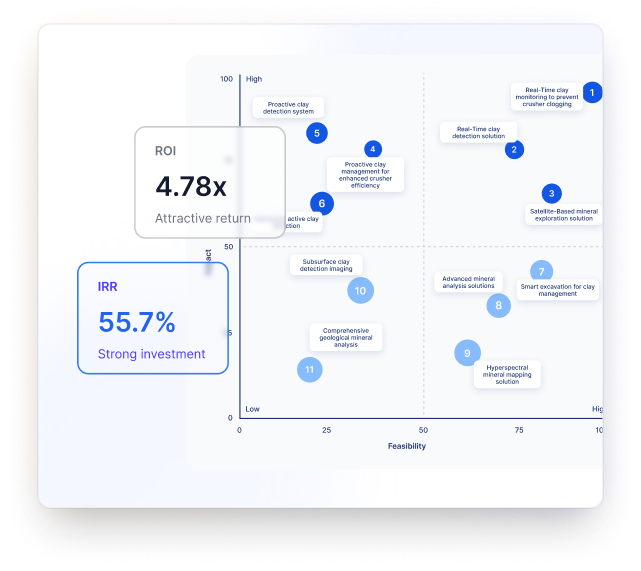
Entrapeer surfaces the innovation moves of comparable organizations, technology trends relevant to your sector, and the competitive whitespace that your current portfolio is not addressing. Each gap is connected to a strategic hypothesis: if this trend continues, and we do not have a bet in this space, what is our exposure? The portfolio reallocation recommendation is grounded in strategic logic, not in which innovation team made the best internal pitch.
4
What Entrapeer builds
An innovation portfolio decision package in three layers. First, a portfolio assessment: current allocation mapped against strategic horizons and competitive requirements, with gaps and overlaps identified. Second, a reallocation recommendation: an optimized portfolio with the rationale for each investment category, the horizon balance, and the conditions under which the allocation should be revised. Third, Decision Memory: the full portfolio logic stored so the next innovation review, the next budget cycle, and the next technology trend that demands a response starts from documented strategic reasoning rather than from the last internal review presentation.
Frequently asked questions
Yes. Portfolio rationalization is one of the most common applications of this use case: identifying which investments to stop, which to scale, and which gaps to fill. The output is a documented rationale for the rationalization, not just a new list of priorities.
Entrapeer treats the innovation portfolio as a component of the corporate strategy, not as a separate function's program. The horizon allocation is reviewed in conjunction with the strategy refresh, so innovation investment tracks the strategic direction rather than lagging it by a planning cycle.
Decision Memory captures the outcome alongside the original hypothesis. When a bet succeeds, the learnings inform the next generation of Horizon 3 investments. When it fails, the documented rationale makes it possible to understand whether the thesis was wrong, the execution was wrong, or the conditions changed, and to apply that learning to the next portfolio review.
Ready to stop
rebuilding strategy?
Share one strategic question. We'll show you the logic, the trade-offs, and the execution path yours to own and update.